
Your appetite has changed. Your body’s needs haven’t.
A Registered Nutritional Therapist and a Pilates teacher on the food and exercise changes that help you manage side effects, protect your muscle and stay well on a GLP-1 medication.
By Erin Tabrar BSc (Hons) mBANT mCNHC, Registered Nutritional Therapist, and Katie Bringloe, Certified Pilates Teacher · 7 minute read
GLP-1 medications are very good at what they do. They quieten the constant thoughts about food and help you feel full on far less. But eating so much less brings its own challenges, and how well you feel while you're on treatment depends a great deal on what you eat and how you move.
The good news is that the most common problems, from nausea and tiredness to muscle loss and missing nutrients, can often be eased or even prevented with a few well-chosen changes to your food and exercise. As a Registered Nutritional Therapist and a Pilates teacher, this is the work we do every day, and it's what this guide is about.
Sadly, that advice rarely comes with the prescription. Researchers at UCL estimate that 1.6 million adults in England, Wales and Scotland used a weight-loss medication in a single year [1], yet four of the leading nutrition and obesity organisations have pointed out that structured nutrition and lifestyle support alongside these medications is still not widespread [2]. So many people end up piecing it together from friends, forums and whatever turns up in their feed, often while feeling rough.
Below, we've set out what the research shows about the challenges, followed by the five changes we think make the biggest difference.
THE CHALLENGESWhat the research tells us
74%
of people taking semaglutide in a major clinical trial reported digestive side effects such as nausea, diarrhoea, vomiting or constipation, compared with 48% of those on placebo. Nausea alone affected 44% [3]. For most people these effects are mild and ease with time, but they're also one of the main reasons people stop treatment, and what and when you eat can make a real difference to how they feel.
25 to 40%
of the weight lost in clinical trials of GLP-1 medications has been lean tissue, which includes muscle [4, 5]. Muscle matters far beyond strength. It keeps you mobile, supports your metabolism and gets harder to rebuild as we get older. Losing some is common with any rapid weight loss, but how much you lose is something you can influence.
1 in 5+
adults in a US study of over 460,000 people with type 2 diabetes starting a GLP-1 medication had a nutritional deficiency diagnosed within a year, with vitamin D the most common [6]. When you're eating much less, every mouthful has to carry more of the load.
Two-thirds
of the weight lost was regained within a year by people in the STEP 1 trial who stopped their medication and the lifestyle support that came with it [7]. The habits you build while you're on treatment are what you'll be relying on afterwards.
The medication does a great deal. What it can't do is choose your meals or build your muscle for you. That part is down to you, and with the right support it's very manageable.
Five changes that make the biggest difference
01 MAKE PROTEIN THE FOCUS OF EVERY MEAL
When you're eating less, it's very easy to fall short on protein. If your body doesn't get enough, it will break down muscle to find the amino acids it needs for lots of essential jobs, just as it would during any rapid weight loss. Current expert advice is to aim for around 1.2 to 1.6g of protein per kilo of body weight each day [2], which for someone weighing 90kg works out at roughly 110 to 145g. That's more than most people realise. A good place to start is to build each meal around a source of protein and eat that part first, so that if you only manage a few mouthfuls, they're the ones that count.
02 MAKE EVERY BITE COUNT
Your portions have shrunk, but your body's needs haven't. You still need the same vitamins, minerals, fibre and omega-3 fats as before, just from much less food, which is where those deficiency figures come from. It helps to see each meal as an opportunity rather than something to get through. Lean towards foods that give you a lot for their size, such as oily fish, eggs, beans and lentils, nuts and seeds, wholegrains and plenty of colourful vegetables. Refined carbohydrates and sugary snacks fill what little space you have without giving much back.
03 EAT LITTLE AND OFTEN
When you're rarely hungry, skipping meals can happen without you noticing. The trouble is that you then need to eat more in one go to meet your needs, which a slower digestive system often doesn't welcome, and long gaps can leave you more tired and more prone to nausea. Smaller meals and snacks at regular times tend to be much kinder. Because your hunger signals may be less reliable now, it can help to eat by the clock rather than waiting to feel hungry, and to keep a few easy, nourishing options to hand for the days you can't face cooking.
04 LET FOOD HELP WITH SIDE EFFECTS
Nausea, constipation, diarrhoea, reflux, burping and fatigue can all be helped by what you eat, when you eat it and even how you drink. Small changes often make a noticeable difference. Try sipping fluids between meals rather than with them, eating slowly and stopping as soon as you feel comfortably full, and going easy on rich, fatty or fried foods, which take longer to leave a slower stomach. If your symptoms are severe or don't settle, speak to your prescriber.
05 MAKE RESISTANCE EXERCISE PART OF YOUR WEEK
Protein gives your body the raw materials to hold on to muscle, but it also needs a reason to keep it, and resistance exercise provides that. It could be weights at the gym, bodyweight exercises at home or Pilates classes designed specifically to build strength. UK guidelines recommend strengthening activities on at least two days a week [10], and gradually making them harder as you get stronger is what keeps your muscles adapting. In the S-LiTE trial, people who combined exercise with a GLP-1 medication reduced their body fat percentage by almost twice as much as those using either one alone [8], and the groups who exercised held on to their results better in the year after treatment ended [9].
Knowing what to do is actually the easy part
If you've read this far, you‘re already invested in supporting your body through this journey with the right nutrition and exercise. The hard bit is turning this knowledge into habits when you're tired, busy and not remotely hungry. An article or a guide can tell you what to do, but it can't keep you going in week three when life gets in the way.
That's why we built Whole Body Health on a GLP-1 as an active six-week programme rather than something you read once and forget. Each week you focus on one change and practise it for the whole week, so it becomes part of your routine before you add the next.
Alongside the nutrition, Katie's Pilates sessions build your strength step by step, starting at true beginner level and working up to a full high-intensity class. Food and movement are usually treated separately. We've put them together, because that combination is what the research keeps pointing to.
ABOUT USWho we are
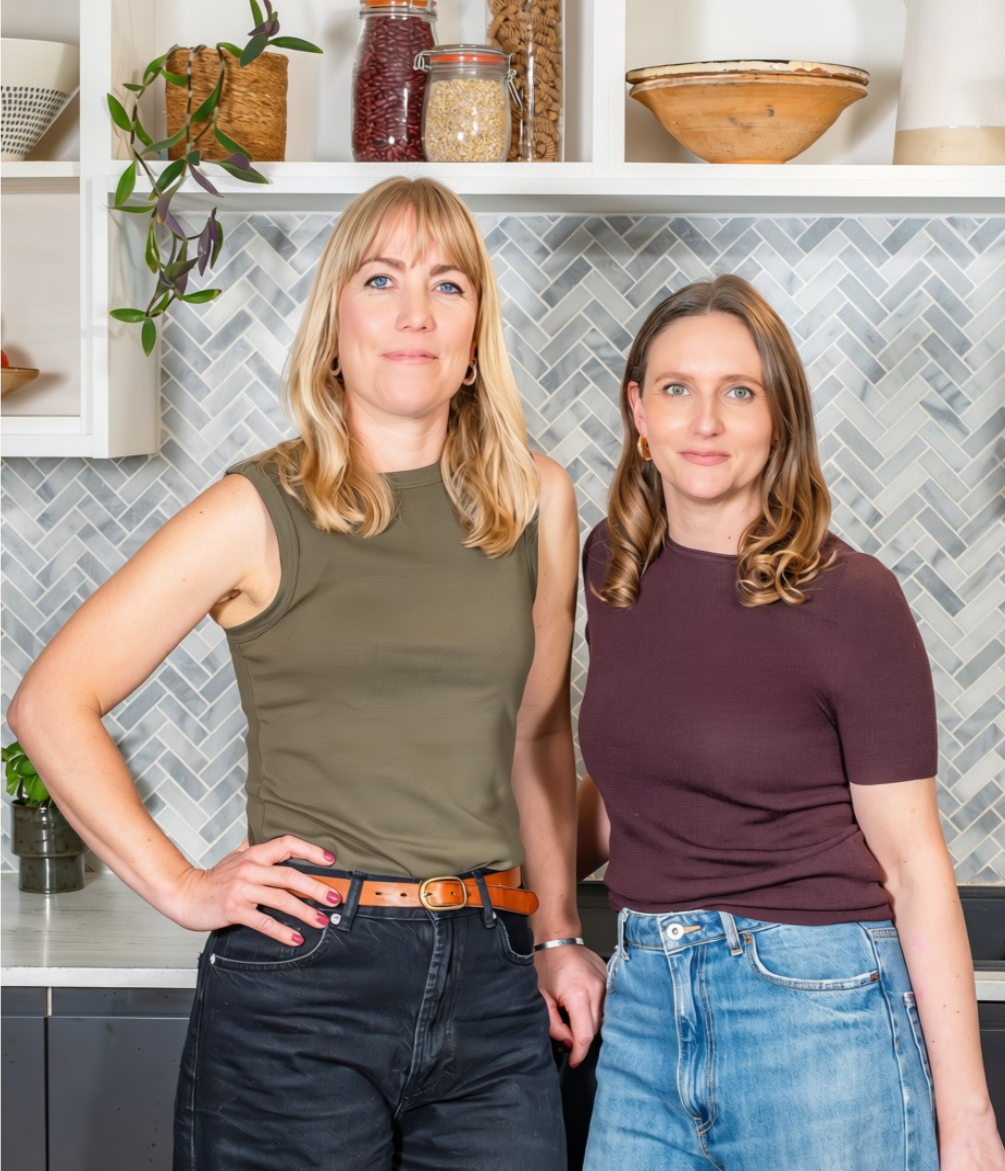
We're Erin and Katie. Erin is a Registered Nutritional Therapist with more than 12 years' experience, including running healthy weight programmes and metabolic health checks. Katie is a Pilates teacher, and she leads every movement session in the programme.
We started Food & Form after seeing so many people losing weight on GLP-1 medication but feeling unwell, under-nourished and unsure what to eat. We wanted to give them the support we felt was missing, in a way that fits around real life.
What's included
Six nutrition modules, each with a short video, a written guide you can come back to and a practical weekly challenge
Nine Pilates videos across three levels, led by Katie, starting at true beginner
A recipe book with over 50 simple recipes and meal ideas
Protein and fibre guides, a supplement guide, meal planners and worked example meal plans
Unlimited lifetime access, so you can go at your own pace and revisit anything whenever you need it
Whole Body Health on a GLP1
your reader offer£79 with code READER20
Six weeks of nutrition and Pilates support for one single payment, with lifetime access to everything. That's less than most people pay for a single month of their treatment.
£59
Find out more about the programme
One-off payment · No subscription · Start straight away
Questions people ask
-
Not at all. Starting with good habits already in place can make the first few weeks much easier.
-
No. Whether you've been on treatment for a few weeks or a couple of years, the nutrition and movement skills apply at every stage, including when you reduce or stop.
-
Yes. Katie starts at true beginner level and builds gradually, so you can follow along whatever your starting point.
-
Yes. The principles work for any way of eating, and the recipes and guidance can be adapted for vegetarian, vegan and most other dietary needs.
You've already taken a big step. This is how you make the most of it.
Use code READER20 for your £20 discount
-
Jackson S et al. (2026), BMC Medicine. UCL News
Mozaffarian D et al. (2025), Am J Clin Nutr. Full text
Wilding JPH et al. (2021), N Engl J Med. Full text
Neeland IJ et al. (2024), Diabetes Obes Metab. Full text
Look M et al. (2025), Diabetes Obes Metab. Full text
Butsch WS et al. (2025), Obesity Pillars. Full text
Wilding JPH et al. (2022), Diabetes Obes Metab. Full text
Lundgren JR et al. (2021), N Engl J Med. Full text
Jensen SBK et al. (2024), eClinicalMedicine. Full text
UK Chief Medical Officers (2019). Physical activity guidelines
This article is published by Food & Form Ltd to introduce our programme. It's for general information and isn't a substitute for personal medical advice.